
Menu
PARTNER UNIVERSITY
East European University
A WHO-listed private medical university in Tbilisi, Georgia — among the most-popular Indian-student destinations.
CountryGeorgia
CityTbilisi
Established2012
IntakesSeptember · February
Duration6 years (MBBS)
LanguageEnglish
ListingWDOMS (WHO) + NMC
EligibilityNEET · 50% PCB (40% reserved)
Tuition$5,000 / year (incl. insurance)
About East European University
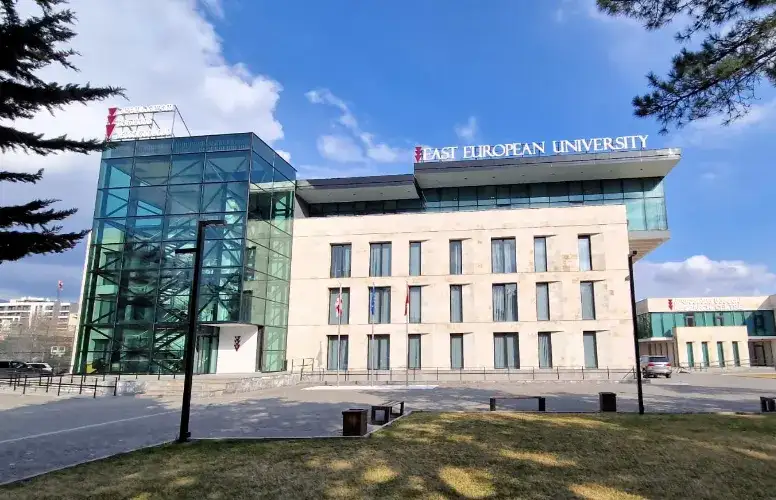
East European University is a private medical university in Tbilisi, the capital of Georgia, established in 2012 and one of the institutions Indian students shortlist most often on our network. Its six-year MBBS is taught entirely in English and follows the familiar pre-clinical-then-clinical sequence, so the move from a NEET-focused background to a European campus feels gradual rather than jarring. It tends to fit applicants with a moderate NEET score who want a Western-recognised degree without Western-European fee levels.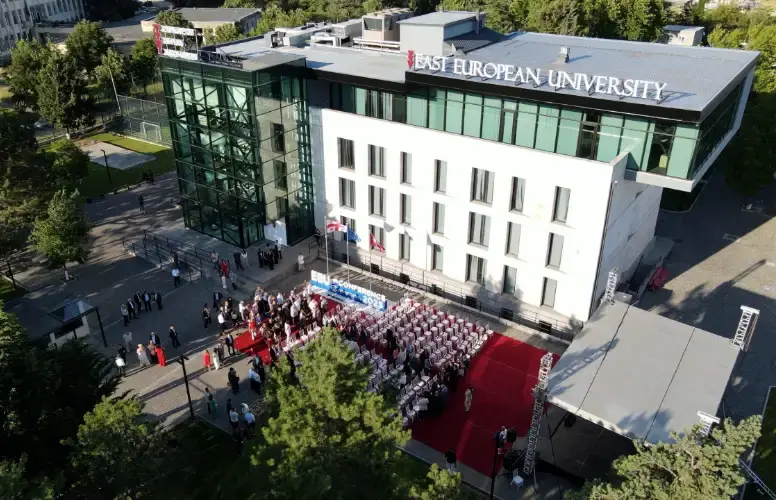
Facilities & clinical training
A Clinical & Practical Skills Development Center with a simulation laboratory, anatomy room and OSCE examination stations
Dedicated chemistry/biochemistry, microbiology and histology laboratories
Affiliated teaching hospitals across Tbilisi — including the Acad. O. Ghudushauri National Medical Center, the Acad. N. Kipshidze Central University Clinic, the National Surgery Center and Tbilisi Central Hospital
Six-year, fully English-medium MBBS with hospital-based clinical years
FMGE/NEXT coaching coordinated with Jadhav Edutech's Indian faculty
Recognition & NMC eligibility
East European University appears in the World Directory of Medical Schools (WDOMS) — the WHO-linked directory the NMC checks — and is accredited by NCEQE, Georgia's WFME-recognised quality agency; its graduates from 2020 onward are also ECFMG-eligible. For India, graduates may sit the FMGE/NEXT screening test provided they meet the National Medical Commission's current criteria: NEET-qualified with at least 50% in PCB (40% for reserved categories) and 17+ years of age, plus an NMC eligibility certificate obtained before you travel. The degree also supports the USMLE and PLAB routes for students aiming at the US or UK. We confirm your profile against the latest NMC rules before recommending the university, so the degree you earn counts toward registration in India.Fees & cost of living
East European University charges a flat $5,000 per year, and that figure already includes student health insurance — so the headline number is the number, with no insurance top-up bolted on later. Across the six-year MBBS that works out to roughly $30,000 in tuition. On top of tuition you budget for living costs: Georgia has no university hostel, so students rent private flats, and a comfortable month in Tbilisi — rent, food and travel — runs about $500 to $600. We share the current official fee and a realistic monthly budget on your counselling call so the full six-year picture is clear before you commit.How admission works at East European University
Apply with your documents and the $100 application fee, which we screen before it goes to the university
Document screening plus a brief online interview — Georgia expects roughly B2-level English, assessed through an internal test or the interview
Conditional admission, followed by an official invitation letter from the university
Apply for the Georgia D3 study visa, then travel and register on campus
Two intakes a year — September and February
Core documents: passport (6–9 months' validity), Class 10 and 12 marksheets, NEET scorecard, passport photos, a medical fitness certificate and notarized translations
NEET is officially required here, and an NMC eligibility certificate must be in hand before you travel
Campus & student life
Tbilisi is a safe, walkable European capital with a mild four-season climate — winters hover around 0 to −5°C and summers reach the low 30s°C — and a cost of living well below Western Europe, around $500 to $600 a month. There is a direct Delhi-to-Tbilisi flight of roughly seven hours, with one-stop options from other metros, so trips home stay manageable. A large, settled Indian community — close to 9,000 students across Georgia — means 20-plus Indian restaurants and hostel messes are within easy reach. Georgian is the local script, but English is widely usable among younger people. Georgia has no university hostel, so students rent private flats, and our on-ground coordinator handles airport pickup and the early paperwork.East European University — common questions
Is East European University recognised for Indian students?
It is WHO-listed, and graduates may appear for the FMGE/NEXT screening test once they satisfy the NMC's eligibility conditions — a valid NEET score and an NMC eligibility certificate. We verify your eligibility before you apply so there are no surprises later.
How long is the MBBS programme here?
Six years, taught in English throughout, with the later years spent on hospital clinical rotations in and around Tbilisi.
Who is East European University a good fit for?
Applicants with a moderate NEET score who want an English-medium, WHO-listed degree in a stable European city without Western-Europe fee levels.
Book a free counselling call and we will map a personalised admission timeline for East European University — eligibility check, document list and intake dates in a single sitting.
Jadhav Edutech Private Limited
HomeLogin
C-11, 3rd Floor, Prozone Trade Center, Prozone Mall, Chhatrapati Sambhajinagar, Maharashtra, 431210
96075 57070· WhatsApp96075 57070
OUR SERVICESMBBS Abroad — Full GuideAbout UsMBBS Abroad in MaharashtraVisit Us — SambhajinagarOur PartnersWhy Study AbroadCost of MBBS AbroadBlog
TOP UNIVERSITIESCaspian International School of MedicineInternational Higher School of Medicine (Bishkek)East European UniversityGeorgian American UniversityAlte UniversityInternational Higher School of Medicine (Issyk-Kul)Kyrgyz State Medical Academy (KSMA)Kazakh Russian Medical UniversitySh. Ualikhanov Kokshetau UniversityBridgetown International University